




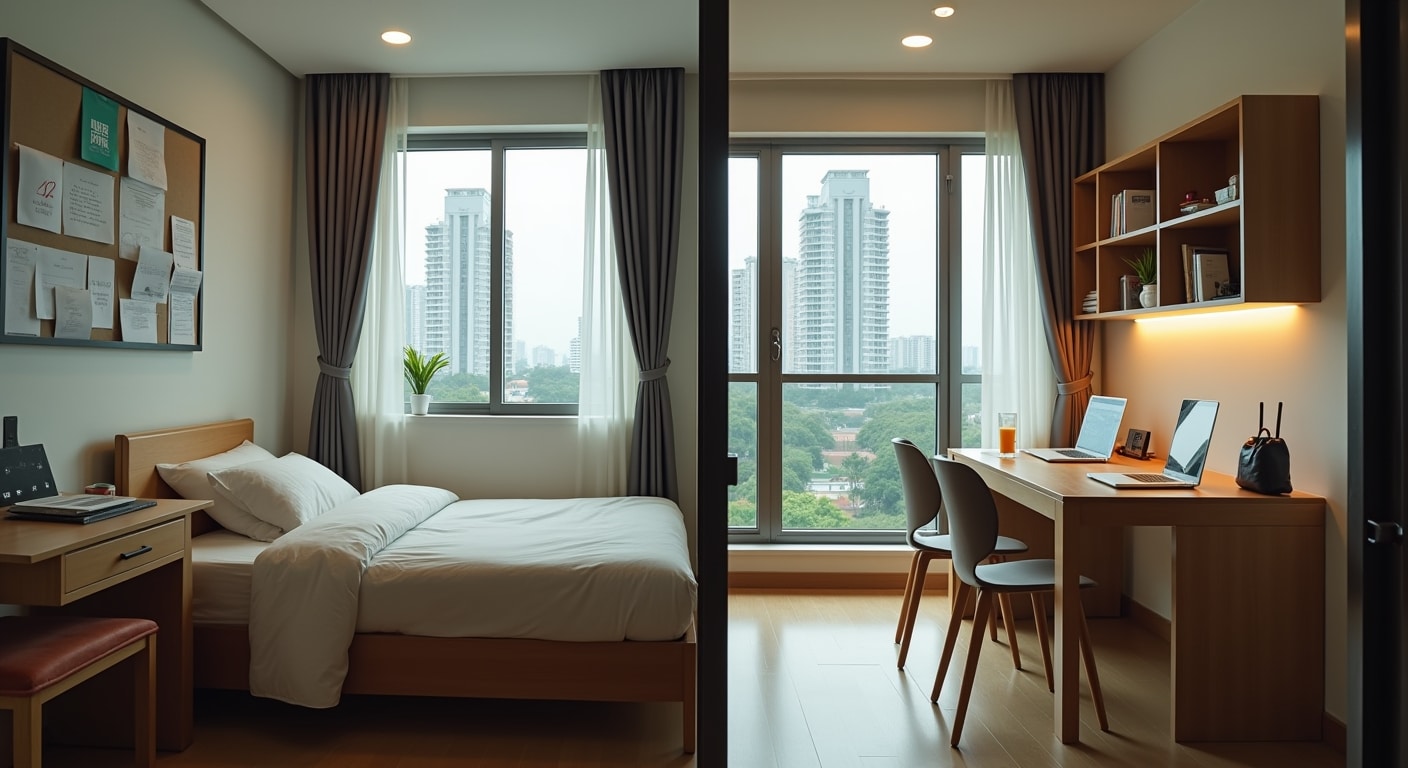
When comparing on campus vs off campus in Malaysia, the better option depends on your budget, daily routine, preferred level of independence and how close you want to be to classes. On-campus living usually offers more convenience and easier access to campus facilities, while off-campus living may provide more privacy, flexibility and choice over your environment.
If you are still planning your wider student life in Malaysia, accommodation should be one of the first things you compare because it affects your monthly expenses, commuting time and daily routine.
For many students, the decision is not simply about rent. It also involves transport, food options, house rules, safety, shared living arrangements and whether you want a more structured or independent lifestyle. This guide breaks down the main differences so you can make a practical decision before accepting a hostel place or signing a rental agreement.
If you want a broader overview of student accommodation in Malaysia, you can compare this guide with other common housing options as well.
On-Campus vs Off-Campus in Malaysia: Quick Comparison
| Factor | On-campus living | Off-campus living |
|---|---|---|
| Cost structure | Often simpler to budget if some services are bundled | May offer more choice, but costs can increase with utilities, transport and deposits |
| Travel time | Usually shorter because you live near lecture halls and campus facilities | Depends on distance, traffic and public transport access |
| Privacy | Usually lower, especially in shared hostel rooms | Often higher if you rent your own room or unit |
| Independence | More structured, with hostel rules or curfews at some institutions | More freedom over routine, visitors and daily living |
| Facilities | Easy access to campus facilities | Facilities vary by property and location |
| Social life | Easier to meet coursemates and join campus activities | Can be quieter, but may feel less connected to campus life |
| Safety | Often has controlled access or campus security | Depends on neighbourhood, building management and travel arrangements |
| Flexibility | Limited choice of room type and rules | More choice in location, housemates and living style |
What Does On-Campus Living Mean?
On-campus living usually refers to staying in a university hostel, student residence or institution-managed accommodation located within the campus or very close to it. Depending on the university, students may stay in single rooms, twin-sharing rooms or larger shared units.
This option is often designed for convenience. You are closer to lecture halls, libraries, student services, campus buses, sports facilities and dining areas. For first-year students, this can make the transition into university life easier.
However, on-campus accommodation usually comes with university policies. These may include room allocation rules, guest restrictions, quiet hours, shared facility use and, at some institutions, curfews or check-in procedures. Students should always check the official university website for current accommodation policies and availability.
What Does Off-Campus Living Mean?
Off-campus living means staying outside university-managed housing. This could include renting a room near campus, sharing an apartment with other students, staying in a private student residence or commuting from a family home.
Off-campus student housing in Malaysia can vary widely. Some students rent a basic room within walking distance of campus, while others choose apartments with more amenities but longer travel time and higher overall expenses. The experience depends heavily on location, landlord terms, transport access and the type of property.
This option usually offers more control over your living environment, but it also requires more responsibility. You may need to manage rent payments, utility bills, internet, housemate arrangements, tenancy terms and transport planning yourself.
Key Differences Between On-Campus and Off-Campus Living
Cost and monthly expenses
On-campus accommodation may be easier to budget because some living costs are bundled or more predictable. Off-campus renting may look affordable at first, but the total can rise once you add utilities, internet, transport, groceries, parking and one-off setup costs.
Students comparing student housing costs in Malaysia should calculate the full monthly cost, not just the rent or hostel fee.
Convenience and travel time
This is one of the biggest differences. On-campus living usually reduces commuting time and makes it easier to attend early classes, use the library at night or return to your room between lectures. Off-campus living may still be convenient if the property is nearby, but travel depends on traffic, weather, public transport reliability or whether you drive.
If commuting will be a major factor, review your likely route and broader transportation for students in Malaysia before deciding.
Privacy and independence
Students who value privacy and independence often prefer off-campus housing. Renting your own room or sharing a unit with chosen housemates can give you more control over your daily routine, visitors, study hours and personal space.
On-campus living may feel more structured. Shared rooms, communal bathrooms and standard hostel policies can be less suitable for students who need a quieter or more private environment.
Safety and security
On-campus accommodation often has easier access to campus security, controlled entry points or staff oversight. Off-campus safety varies more. Students should consider neighbourhood conditions, lighting, access control, distance from public transport stops and how safe the route feels at night.
Safety should be assessed practically rather than assumed. A cheap rental room may not be a good choice if it creates daily safety concerns or late-night transport problems.
Facilities and amenities
On-campus accommodation usually gives easier access to lecture halls, libraries, cafeterias, study spaces, sports facilities and student support services. Off-campus properties may offer better room features or more living space, but they may not include the same campus convenience.
When comparing options, check what is actually included rather than assuming a hostel or rental will have the same facilities.
Social life and campus experience
Living on campus often makes it easier to meet coursemates, join clubs, attend events and build a social routine around university life. You are physically closer to student activities and more likely to interact with other students daily.
Off-campus living may still suit students with active social lives, but it usually requires more deliberate effort to stay involved on campus.
Flexibility and house rules
Off-campus living generally offers more flexibility in lifestyle, especially if you choose your own housemates and living arrangement. On-campus accommodation may have fixed room assignments, visitor policies, shared facility rules or move-in and move-out procedures set by the institution.
Neither option is automatically better. It depends on whether you prefer structure or flexibility.
Advantages of Living On Campus
- Shorter commute: easier access to classes, labs, libraries and campus events.
- Simpler routine: less time spent planning transport or dealing with traffic.
- Stronger campus connection: easier to make friends and participate in university life.
- Convenient support access: student affairs offices, academic support and campus services are usually nearby.
- Potentially easier transition: especially helpful for first-year students adjusting to university.
- More predictable setup: less need to deal with landlords, property searches or utility activation.
Disadvantages of Living On Campus
- Less privacy: shared rooms or shared facilities may not suit every student.
- More rules: some hostels have guest restrictions, curfews or strict residence policies.
- Limited choice: you may not be able to choose your room type, block or roommates.
- Availability issues: not every student is guaranteed a hostel place.
- Campus-centred environment: students wanting more independence may feel restricted.
Advantages of Living Off Campus
- More independence: greater control over schedule, meals, visitors and lifestyle.
- Potentially more privacy: especially if you rent a single room or quieter unit.
- More housing choices: students can compare locations, room types and amenities.
- Better long-term fit for some students: especially those already familiar with city life or shared renting.
- Possible lifestyle flexibility: you can choose a place closer to shops, transport hubs or part-time work.
For a more focused comparison of room rental and hostel living, see this guide on university hostel vs renting a room in Malaysia.
Disadvantages of Living Off Campus
- Extra costs: rent is only part of the total expense.
- Longer or less reliable commute: transport delays can affect attendance and daily energy.
- More responsibilities: students may need to manage bills, cleaning, housemates and tenancy matters.
- Varied safety levels: not all neighbourhoods or properties are equally suitable for students.
- Less campus immersion: it can be harder to stay for late activities or early-morning classes.
Cost Factors Students Should Compare
When deciding between living on campus vs off campus in Malaysia, students should compare total living costs over a typical month or semester rather than looking at advertised rent alone. A simple budgeting worksheet can help.
Rent or hostel fees
Start with the most obvious cost: the hostel fee or monthly rent. Compare what each option includes. Some hostel charges may cover more essentials, while a rental room may appear cheaper but exclude several basic costs.
Utilities and internet
For off-campus housing, ask whether electricity, water, internet and maintenance are included. If not, estimate how much these may add to your monthly expenses. This matters even more if you use air-conditioning heavily or share bills with housemates.
Food and daily expenses
Accommodation affects your food budget. Students living on campus may rely on campus cafeterias or nearby stalls, while off-campus renters may cook more often or order food more frequently depending on kitchen access, time and location.
Transportation and parking
Off-campus students may need to budget for fuel, public transport, e-hailing, tolls or parking. Even a relatively short commute can become expensive if you travel daily. If you are planning your spending, build these costs into your monthly student budget in Malaysia.
Deposits, contracts and one-off setup costs
Off-campus rentals may involve deposits, advance rental, basic furnishings, kitchen items or moving costs. Students should also read tenancy terms carefully before agreeing to a contract. These one-off costs can be significant even if the monthly rent seems manageable.
Which Option Is Better for Different Types of Students?
First-year students
On-campus accommodation is often a practical starting point for first-year students because it reduces transport planning and helps them settle into university routines more quickly. Being closer to campus can also help them navigate classes, support services and student activities.
Students on a tighter budget
There is no single answer. A hostel may be cheaper overall if it reduces transport and setup costs. An off-campus room may be more affordable if it is in a suitable location and shared sensibly. The best approach is to compare the total monthly cost, including commuting and utilities, not just the headline rent.
Students who value independence
Off-campus living usually suits students who want more privacy, a quieter environment or greater control over their routine. This can be especially important for students who prefer to cook, manage their own timetable or choose their housemates.
International students
International students often benefit from on-campus accommodation at the beginning because it can simplify settling in, meeting other students and understanding the local environment. However, some may later prefer off-campus housing once they are familiar with transport, neighbourhoods and rental expectations. Students should verify any university housing rules and relevant official guidance through the university and EMGS where applicable.
Students studying in city campuses
Students at city campuses may find that nearby off-campus housing offers more options, but commuting time becomes a major issue if traffic is heavy or public transport links are inconvenient. In dense urban areas, a more expensive room closer to campus may sometimes save time and daily transport costs.
Questions to Ask Before Choosing Accommodation
- How much will the accommodation cost in total each month?
- What is included in the fee or rent?
- How long will the daily commute take during normal class hours?
- Is the area safe during the evening?
- What house rules, curfews or visitor restrictions apply?
- Will you need to share a room, bathroom or kitchen?
- Is internet access reliable enough for classes and assignments?
- How close are food options, laundries, shops and public transport?
- Are there deposits, contract terms or move-out conditions to understand first?
- Will this environment support your study habits and sleep schedule?
Common Mistakes Students Make When Comparing Accommodation
- Looking only at rent: total cost matters more than the advertised monthly amount.
- Ignoring commuting time: a cheaper room far away can cost more in time, energy and transport.
- Assuming all hostels are the same: policies, room types and facilities vary by institution.
- Not checking the surroundings: food access, safety and transport links affect daily life.
- Overestimating independence: off-campus living brings more responsibility than many students expect.
- Signing too quickly: always understand the tenancy terms, deposits and who is responsible for bills.
- Choosing based only on friends: your study habits, budget and comfort matter too.
Final Thoughts: How to Decide Between On-Campus and Off-Campus Living in Malaysia
The best choice between on-campus and off-campus living in Malaysia depends on what matters most to you. If convenience, easier adjustment and stronger campus involvement are your priorities, on-campus accommodation may be the better fit. If you want more privacy, independence and flexibility, off-campus housing may suit you better.
Before making a decision, compare the full monthly cost, travel time, house rules, safety, study environment and your own lifestyle. Then verify current accommodation details directly with the university or housing provider before you commit, especially for fees, room availability, policies and contract terms.
Frequently Asked Questions
Is it cheaper to live on campus or off campus in Malaysia?
It depends on the institution, location and your lifestyle. On-campus living may be cheaper overall if it reduces transport and setup costs. Off-campus living may be cheaper in some areas, but students should include utilities, food, transport and deposits in the comparison.
Is on-campus accommodation better for first-year students?
It is often a practical choice for first-year students because it can make the transition to university easier. Living near classes and student services may help new students settle in more quickly.
What extra costs should students consider when renting off campus in Malaysia?
Common extra costs include utilities, internet, transport, parking, deposits, advance rent, household items and possible moving costs. These can make off-campus housing more expensive than it first appears.
Can international students in Malaysia live off campus?
Some international students may choose off-campus housing, but they should first check current university policies and any relevant official guidance. It is important to verify approved accommodation arrangements and practical local requirements before renting.
How important is commuting time when choosing student accommodation?
Very important. Long or unreliable commutes can affect punctuality, energy levels, study time and participation in campus activities. A place that looks affordable may be less practical if the daily journey is difficult.
What are the main disadvantages of living in a university hostel?
The main disadvantages are usually less privacy, shared facilities, stricter rules and limited choice over room arrangements. Some students may also find hostel life noisy or restrictive.
How can I decide which accommodation option suits my budget and lifestyle?
Compare total monthly cost, travel time, privacy, safety, study environment and how much independence you want. The best option is the one you can manage comfortably both financially and practically.
Should students choose on-campus or off-campus housing at private universities in Malaysia?
There is no universal answer. Students at private universities should compare available on-campus accommodation, nearby rental options, transport arrangements and total monthly expenses before deciding. Always check the university’s current housing information directly.