




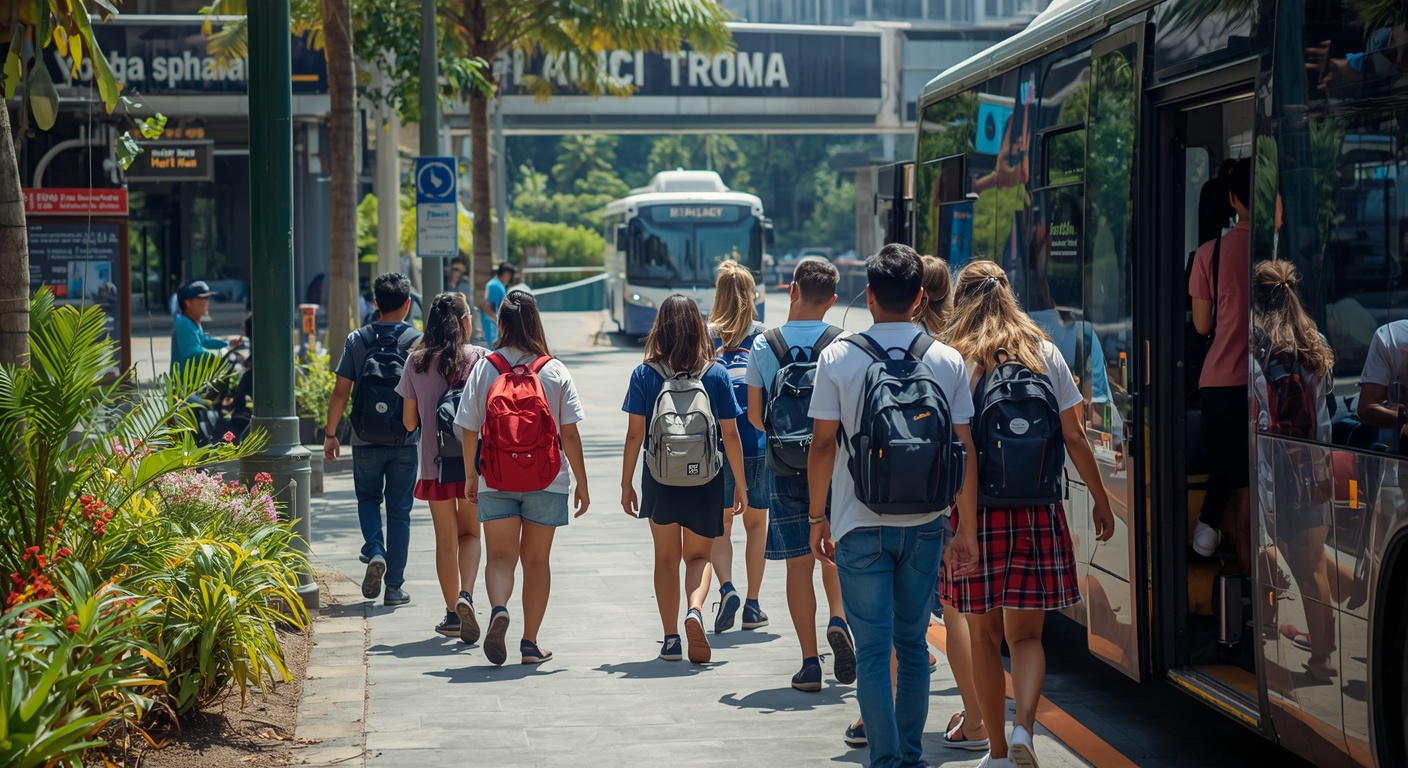
Transportation for students in Malaysia is one of the first practical issues to sort out after choosing a college or university. Whether you are studying in Kuala Lumpur, Selangor, Penang, Johor, Sabah, or Sarawak, your daily commute affects your budget, time, safety, and overall student experience. The good news is that student transport Malaysia options are fairly wide, from trains and buses to e-hailing, walking, cycling, and campus shuttle services. If you understand how public transport Malaysia students usually rely on works, getting around can be simpler and more affordable.
For many students, transport also connects closely to other parts of campus life. Where you live, how much you spend every month, and even your class schedule can shape your transport choices. If you are still planning your overall student journey, this complete guide to studying in Malaysia is a useful starting point.
Why transportation matters for students in Malaysia
Good transport planning helps students save money, reduce stress, and arrive on time for lectures, labs, internships, and group assignments. In major student hubs such as Kuala Lumpur and Subang Jaya, public transport is more developed, so many students can manage without owning a car or motorcycle. In smaller towns or areas farther from campus, students may depend more on feeder buses, shuttle services, or e-hailing.
Transportation for students in Malaysia is not only about convenience. It also affects personal safety, attendance, and quality of life. A one-hour commute each way can become tiring during exam periods. On the other hand, paying more for accommodation near campus may reduce transport spending and save time. To compare your travel budget with rent, food, and utilities, read this guide on the cost of living for students in Malaysia.
Main transport options for students
Rail networks in urban areas
For students in the Klang Valley, rail is often the most reliable option. LRT, MRT, Monorail, KTM Komuter, and airport rail links connect many residential and study areas. If you live near a station and your campus is accessible by train or feeder bus, this can be one of the best ways of getting around Malaysia students commonly use in cities.
Rail travel is usually faster than driving during peak traffic hours. It is also easier to predict your arrival time, which matters if you have early morning classes or strict attendance requirements.
Public buses
Buses are an important part of public transport Malaysia students depend on, especially for short routes, first-mile and last-mile connections, and travel within town areas. In some locations, buses are budget-friendly but may be less frequent than trains. Waiting times and route availability vary by state and local authority.
Campus shuttles
Many universities and colleges provide shuttle buses between hostels, academic buildings, nearby train stations, and student housing areas. This is one of the most useful student transport Malaysia solutions because it is often low-cost or free. New students should check their campus transport schedule during orientation week.
E-hailing, taxis, and private rides
E-hailing is convenient for students who travel late, carry heavy materials, or live in areas with weaker public transport coverage. While more expensive than buses or trains, it can be practical for occasional use, especially when travelling in a group and splitting the fare.
Walking and cycling
If you stay close to campus, walking may be the cheapest and healthiest option. Some campuses are also suitable for cycling. However, weather, road safety, and pedestrian access are important considerations in Malaysia, especially during heavy rain or in areas with limited sidewalks.
Public transport in different student cities
Transportation for students in Malaysia can feel very different depending on where you study.
|
Location |
Common student transport options |
|
Kuala Lumpur and Selangor |
MRT, LRT, KTM, buses, campus shuttles, e-hailing, walking in selected areas |
|
Penang |
Buses, e-hailing, private rides, some walking depending on accommodation location |
|
Johor Bahru |
Buses, e-hailing, private transport, campus shuttles |
|
Ipoh and smaller towns |
Local buses, e-hailing, motorcycles, private cars, campus transport |
|
Sabah and Sarawak |
Buses in selected areas, private transport, campus shuttles, e-hailing where available |
For example, a student at a university near an MRT or LRT station in the Klang Valley may spend less time commuting without owning a vehicle. By comparison, a student in a less connected suburban area may find that e-hailing or a hostel shuttle is more practical than relying only on public transport.
How much should students budget for transport?
Your monthly transport cost depends on distance, city, and travel habits. A student who lives on campus may spend very little, while someone who commutes daily from a cheaper rented room farther away may spend more on transport.
-
Low-cost commute: Walking, cycling, or campus shuttle use can keep monthly transport expenses low.
-
Moderate-cost commute: A mix of public buses and trains is common for urban students.
-
Higher-cost commute: Regular e-hailing, long-distance daily travel, or private vehicle use increases costs through fares, petrol, tolls, parking, and maintenance.
A simple Malaysia-specific scenario shows the trade-off clearly. A student renting a room near campus in Petaling Jaya may pay slightly higher rent but save on daily transport. Another student renting farther away in a cheaper area may spend more time and money on trains, buses, or e-hailing. The better choice depends on total monthly expenses, not rent alone.
Tips for choosing the best student transport Malaysia option
Look at your full weekly schedule
Check how often you need to travel for classes, part-time work, internships, clubs, and weekend errands. A transport option that looks cheap may become tiring if it involves too many transfers.
Test the route before your semester starts
Do one full trial trip during peak hours if possible. This gives you a realistic idea of travel time, waiting time, and crowd levels.
Balance cost with reliability
Public transport Malaysia students use most often is usually the most affordable option, but reliability matters. If missing one bus means being late for a lab session, you may need a backup plan.
Check accommodation distance carefully
When comparing housing, ask how far it is from the nearest station, bus stop, or campus gate. A place described as “near campus” may still require a long walk in the heat or rain.
Safety tips when getting around Malaysia students should know
Safety should always be part of transport planning. This is especially important for students travelling early in the morning or after evening classes.
-
Use well-lit routes and busy pickup points when walking or waiting for transport.
-
Share your trip details with a friend or family member if travelling late.
-
Keep your phone charged and carry enough credit or data.
-
Be alert with your bag, laptop, and wallet on crowded trains and buses.
-
If using e-hailing, check the car plate number and driver details before entering.
-
Avoid standing alone in isolated areas, especially at night.
Students using motorcycles or driving should also factor in road safety, fuel costs, parking rules, and weather conditions. Heavy rain can affect both travel time and comfort, so always leave with extra time during the monsoon season.
Should students own a car or motorcycle?
Not every student needs a vehicle. In fact, transportation for students in Malaysia is often manageable without one if your campus is in a connected area. Before buying or using a car or motorcycle, consider the full costs involved.
-
Petrol
-
Tolls
-
Parking fees
-
Maintenance and repairs
-
Insurance and road tax
-
Safety risks and traffic stress
A motorcycle may seem cheaper than a car, but it comes with added exposure to bad weather and road risks. For many students, using public transport plus occasional e-hailing is still the better financial choice.
If budget is a concern, it also helps to review available financial support options, including this guide to scholarships in Malaysia for local students, since scholarships can ease overall student expenses and make housing closer to campus more affordable.
Smart ways to make commuting easier
Small habits can make student transport Malaysia much smoother.
-
Leave earlier during peak hours.
-
Keep a backup transport option for days when services are delayed.
-
Store digital payment methods and important travel apps on your phone.
-
Pack light when possible, especially if you need to walk between stops.
-
Coordinate rides with course mates if you live in the same area.
-
Try to group errands, groceries, and study meetups into one trip.
These small decisions can reduce costs and save energy over a full semester.
Frequently asked questions about transportation for students in Malaysia
1. Is public transport enough for most students in Malaysia?
It depends on the city and the location of your campus. In places like Kuala Lumpur and Selangor, many students can rely on trains, buses, and campus shuttles. In less connected areas, students may need e-hailing or private transport more often.
2. What is the cheapest way of getting around Malaysia students can use daily?
Walking, cycling, and campus shuttle services are usually the cheapest options. After that, buses and trains are often more affordable than regular e-hailing or driving.
3. Should I live closer to campus or choose cheaper rent farther away?
You should compare total monthly costs, including rent, transport, time, and convenience. Sometimes paying slightly more to live near campus saves money and reduces stress in the long run.
4. Is owning a motorcycle a good idea for students?
It can be practical in areas with limited public transport, but students should think about maintenance, fuel, safety, and weather before deciding. It is not automatically the cheapest option overall.
5. How can new students choose the best transport option?
Start by checking your campus location, nearby stations or bus stops, and your class schedule. Test your route before semester begins and always have a backup option for delays or bad weather.
Conclusion
Transportation for students in Malaysia is not one-size-fits-all. The best option depends on your campus location, budget, schedule, and comfort level. Many students do well with a combination of public transport, shuttle services, walking, and occasional e-hailing. By planning early and comparing both cost and convenience, you can build a safer, more affordable routine that supports your student life in Malaysia.