




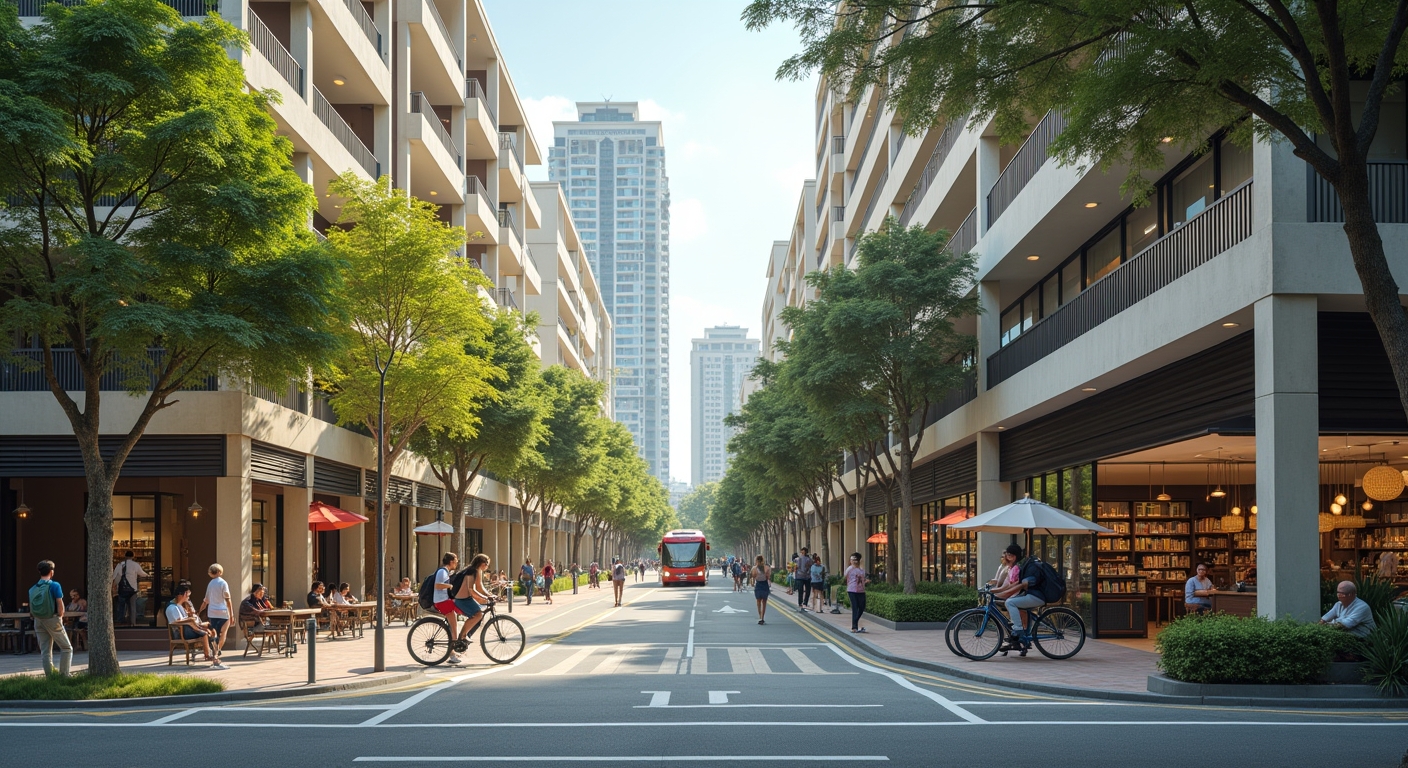
Finding the right student area KL can make a big difference to your daily life, budget, and study experience. Kuala Lumpur offers many neighbourhoods that suit different student needs, whether you want to live close to campus, save on rent, or enjoy better public transport. For Malaysian students and parents, choosing where students live in Kuala Lumpur often comes down to a balance of affordability, safety, convenience, and lifestyle. In this guide, we look at the best area in KL for students and what to consider before signing a tenancy agreement.
What makes a good student area KL?
Not every neighbourhood is ideal for student life. A good student area KL usually has easy access to universities or colleges, affordable rental options, food choices, public transport, and basic services like clinics, laundries, and supermarkets.
Students in Kuala Lumpur often rely on MRT, LRT, Monorail, buses, or even campus shuttles. Because of this, an area that looks cheaper on paper may cost more in travel time and fares if it is far from your campus.
Before choosing student accommodation KL, consider these points:
- Distance to campus and commuting time
- Monthly rent and utility costs
- Access to public transport
- Safety, especially at night
- Availability of food at student-friendly prices
- Internet reliability for assignments and online classes
- Room type, house rules, and tenancy terms
If you are still planning your education journey, this complete guide to studying in Malaysia is a useful place to start.
Top areas where students live in Kuala Lumpur
There is no single best answer for where students live in Kuala Lumpur because it depends on your institution and lifestyle. Still, several neighbourhoods are consistently popular among local and international students.
Wangsa Maju
Wangsa Maju is one of the most established student-friendly areas in KL. It is popular with students attending institutions nearby and those who want direct access to the LRT. The area has malls, affordable eateries, convenience stores, and many rental units ranging from shared apartments to condominiums.
For students who want a balance between convenience and community, Wangsa Maju remains a strong choice.
Taman Melati and Setapak
Taman Melati and Setapak are often considered among the best area in KL for students because they have large student populations and many budget rental options. Students can usually find rooms in shared apartments, flats, or landed homes at more affordable rates compared with prime city-centre locations.
Food is another plus. Mamak stalls, mixed rice shops, and budget cafes are easy to find, which helps students control spending.
Cheras
Cheras attracts students who want more rental choices and access to MRT stations. Some parts of Cheras are busier and more urban, while others feel more residential. This variety makes it easier for students to choose based on budget and lifestyle.
It can be a practical option for those studying in central KL but wanting slightly lower rent than city-centre areas.
Brickfields and KL Sentral area
Brickfields is a convenient choice for students who value connectivity. With KL Sentral nearby, students can connect to multiple train lines and reach many campuses across the Klang Valley. Rental costs may be higher in some buildings, but the transport savings and reduced travel stress can make up for it.
This area suits students with internships, part-time work, or frequent travel.
Bangsar South and Kerinchi
Bangsar South and Kerinchi are modern, better-connected locations that appeal to students who want a more urban lifestyle. There are serviced apartments, shared units, cafes, and co-working friendly spaces. However, this usually comes with a higher monthly budget.
For some students, the extra cost is worthwhile because the environment feels more organised and closer to business districts.
Best area in KL for students by budget
Your budget often determines the best area in KL for students more than anything else. A student paying RM450 for a shared room in Setapak may actually have more monthly flexibility than someone paying RM900 in a prime location, even if the second place looks newer.
| Budget level | Suitable areas | What to expect |
| Lower budget | Setapak, Taman Melati, parts of Cheras | More shared units, older buildings, lower food costs |
| Mid-range | Wangsa Maju, parts of Brickfields | Better transport access, more amenities, moderate rent |
| Higher budget | Bangsar South, KL Sentral surroundings | Modern buildings, strong connectivity, lifestyle convenience |
A simple Malaysia-specific scenario: a student studying at a college near the city centre may choose Brickfields over a cheaper room farther out because changing trains daily and getting home late after classes can be tiring. Another student with mostly on-campus activities may prefer Setapak to keep rent low and spend more on books, food, or savings.
To understand your full monthly spending better, read this guide on cost of living for students in Malaysia.
Student accommodation KL: common housing options
When searching for student accommodation KL, students will usually compare three main options: on-campus housing, shared rental units, and private studios or apartments.
On-campus accommodation
This is often the most convenient if your institution offers it. You will be close to lectures, campus facilities, and student activities. However, spaces can be limited, and room rules may be stricter.
Shared apartments or houses
This is one of the most common choices for students in KL. You share rent and utilities with housemates, which helps lower monthly costs. It is also easier to find in areas with large student populations.
Private rooms or studios
These give more privacy but usually cost more. They may suit final-year students, postgraduates, or those who need a quieter environment for research and internships.
Always check whether rental listings include Wi-Fi, air-conditioning, water and electricity, parking, or maintenance fees. Some cheap listings become expensive after extra charges are added.
How to choose where students live in Kuala Lumpur based on campus access
The best student area KL should match your actual route to campus, not just look good online. Before you rent, test the journey using public transport apps or by visiting the area yourself.
- Check the nearest MRT, LRT, or bus stop
- Estimate door-to-door travel time during peak hours
- See if the route is safe and well-lit at night
- Find out whether e-hailing is easy to get in the area
- Consider weekend access to supermarkets and study spaces
Parents should also think beyond distance alone. An apartment five kilometres away may be less practical than a place ten kilometres away if the route is congested or requires multiple transport changes.
Safety and lifestyle factors students should not ignore
Safety matters just as much as rent. When viewing potential student accommodation KL, pay attention to the building entrance, lighting, security guards, CCTV presence, and the general condition of the neighbourhood.
It is also worth visiting both in the daytime and evening. Some places feel convenient in the afternoon but become very quiet or poorly lit later at night.
Lifestyle is another factor. Ask yourself:
- Can you get affordable meals nearby?
- Is there a grocery store within walking distance?
- Will noise from traffic or nightlife affect your studies?
- Do you prefer a lively neighbourhood or a quieter residential area?
These small details shape your daily routine more than many students expect.
Rental tips before booking student accommodation KL
Many students rush into renting because they want to secure a room quickly. It is better to slow down and check the details carefully.
- Read the tenancy agreement fully
- Confirm the deposit amount and refund terms
- Ask who pays for utilities and internet
- Take photos of the room condition before moving in
- Check whether visitors, cooking, or late returns are restricted
- Make sure the landlord or agent is legitimate
If possible, speak to current or former tenants. They can tell you whether the landlord is responsive and whether the area is truly student-friendly.
Students managing finances on their own should also explore funding support early. This guide to scholarships in Malaysia for local students may help reduce overall study costs.
Which student area KL is best for different types of students?
The best area in KL for students depends on personal priorities.
For students who want lower rent
Look at Setapak, Taman Melati, and selected parts of Cheras. These areas are often more practical for students trying to control monthly expenses.
For students who want good transport
Brickfields, KL Sentral surroundings, and Wangsa Maju stand out because they make daily commuting easier.
For students who want modern lifestyle convenience
Bangsar South and nearby areas may be attractive if your budget allows for higher rent.
For first-year students
Choose a neighbourhood with simple transport, plenty of food options, and a visible student community. This usually makes the adjustment to city life easier.
FAQs about student area KL
What is the best student area KL for affordability?
Setapak, Taman Melati, and parts of Cheras are commonly seen as affordable choices for students because rent and food costs can be lower than in more central locations.
Where do students live in Kuala Lumpur most often?
Many students live in areas such as Wangsa Maju, Setapak, Cheras, Brickfields, and around transport-linked neighbourhoods that offer shared rentals and easy access to campus.
How much does student accommodation KL usually cost?
It depends on the area and room type. Shared rooms or rooms in older apartments may be more budget-friendly, while private studios and modern serviced residences usually cost more.
Is it better to stay near campus or near public transport?
Ideally, choose a place that offers both. If that is not possible, compare total commuting time and cost. A place near strong public transport can sometimes be better than a place that is physically closer but harder to reach.
Conclusion
Choosing the right student area KL is about more than finding the cheapest rent. The best area in KL for students should support your classes, budget, safety, and daily routine. Whether you prefer affordable neighbourhoods like Setapak and Taman Melati, well-connected areas like Wangsa Maju and Brickfields, or more modern options like Bangsar South, the right choice depends on your priorities. Take time to compare costs, commute routes, and amenities before deciding, and you will have a much smoother student life in Kuala Lumpur.